
According to a recent survey, 96.7% of teens selected school as one of their top 3 stressors. While it is hard to adjust your workload at school, the key to being successful is learning how to become a successful learner! See tips and tricks below…

What is Stress?
The book Living with Stress details that stress is how your body responds to a particular pressured situation. Many elements of school prove to be stressors such as tests, college, grades, clubs, social relationships and more. It is normal to be stressed, but too much stress can lead to health issues in teens. 7
The following are symptoms of severe stress, given by the American Phycological Association. If you are experiencing any of these or you are just feeling overwhelmed, see the section of managing stress…
- Headaches, muscle tension, neck or back pain
- Upset stomach
- Dry mouth
- Chest pains, rapid heartbeat
- Difficulty falling or staying asleep
- Fatigue
- Loss of appetite or overeating unhealthy foods
- Increased frequency of colds
- Lack of concentration or focus
- Memory problems or forgetfulness
- Jitters
- Irritability
- Short temper
- Anxiety 7
Managing Stress
According to USA Today, 27% of teens report experiencing extreme stress during the school year, while only 13% report it in the summer. Luckily, there are many effective ways to reduce this stress in your life! See the following tips from the book Defeating Stress and Anxiety below. 11
- Finding the right coping solution – coping solutions slow down your heart rate, breathing, and blood flow during times of stress, however there isn’t just one that works for everyone. The first way to manage stress is to experiment a little, and find a coping solution that works specifically to you!
- Get it out of your head – when you tell yourself that something is difficult, or you can’t do it, it actually increases your stress levels. Change your self talk from negative to positive so that you can defeat the task at hand.
- Develop strong communication skills – You can relieve tension by finding someone to talk to, and by clearly expressing your emotions. Don’t be afraid to reach out to someone just to talk and feel not alone
- Slowdown – when you do things calmly and carefully, you tend to get it done with much less stress. Allow yourself to take a breather and work on something with precision.
- Daily Meditation – Finding a quiet place away from distractions can calm stress as well. Find someplace to sit down and relax your muscles, maybe listening to soothing music. Focus inward and try not to let your mind wander to places of stress. Remind yourself that you deserve a break!
- Exercise – Daily exercise can help your body, but it can also help your mind. It can calm blood pressure, loosen muscles, and push toxins out of your body. Occasionally take a break from your phone, video games, or screens to get some exercise.
- Diet – Filling your body with nutrient filled foods can also make you feel better. Eating a balanced diet with all 5 food groups can help you out immensely.
- Free Time – Take some time to hang out with friends and do what you enjoy. This can look different for many people, but it’s important to take breaks and let yourself laugh and be happy!
- Give – Helping others can serve as a much needed break from your own stress. It can build confidence, give a greater life’s purpose, and allow you to connect with others. Giving is an amazing way to relieve stress and can come in many different forms. On occasion you can give your time, talents, or resources to brighten your own and someone else’s day.
- Sleep! – Teens need sleep. Their bodies are growing and require consistent sleep. For teens, 9 hours of sleep is recommended however they only average 7.4 hours each night. Try to cut down on screens, caffeine, and stimulants later in the day to try to maximize your sleep intake and reduce stress in the morning! 11
Becoming a Better Student
Studying
- Taking Notes – Writing notes is better than typing them! It might feel like more work, but it creates deep brain work and significantly increases your memory of the topic. To help your note taking, create a section of key terms to help you study later
- Where to Study – Although it seems strange, changing the place you study. When your brain gets used to the surroundings of where you are studying, it can get confused when you are taking the test in a different location, so try to switch it up! 10
Activities
- Find a Club – Finding a club you connect with can greatly benefit your focus in school, and it can help you find people you enjoy
- Seeking Help – Don’t be afraid to ask about starting a club that interests you!
- More Help – Work with others to help yourself at school! 10
Self-Care
- Exercise- When you exercise, your brain produces a chemical that makes your neurons stronger and healthier, strengthening your memory skills
- Food – Eating healthier foods like fruit and vegetables can have some of the same effects as exercise, so a healthy routine can help you out in school
- Sleep – Shockingly, the longer you are awake the more toxins will build up in your brain, and sleeping will wash them away. So if you don’t get enough sleep, you can start the day off groggy and not ready for learning 10
5 Tips for Remembering Material
- Focus – tell yourself to focus and concentrate during class
- Practice – practice remembering things periodically throughout the day
- Picture – picture things about the lesson you just learned
- Store – store the information by relating it to things you already know
- Recall – repeatedly bring the information to your mind throughout the day 10
Make sure you’re prepared for your test!
The checklist below will help you make sure you are prepared for a test. If you have more yes answers than no answers, you did pretty well! 10
Procrastination
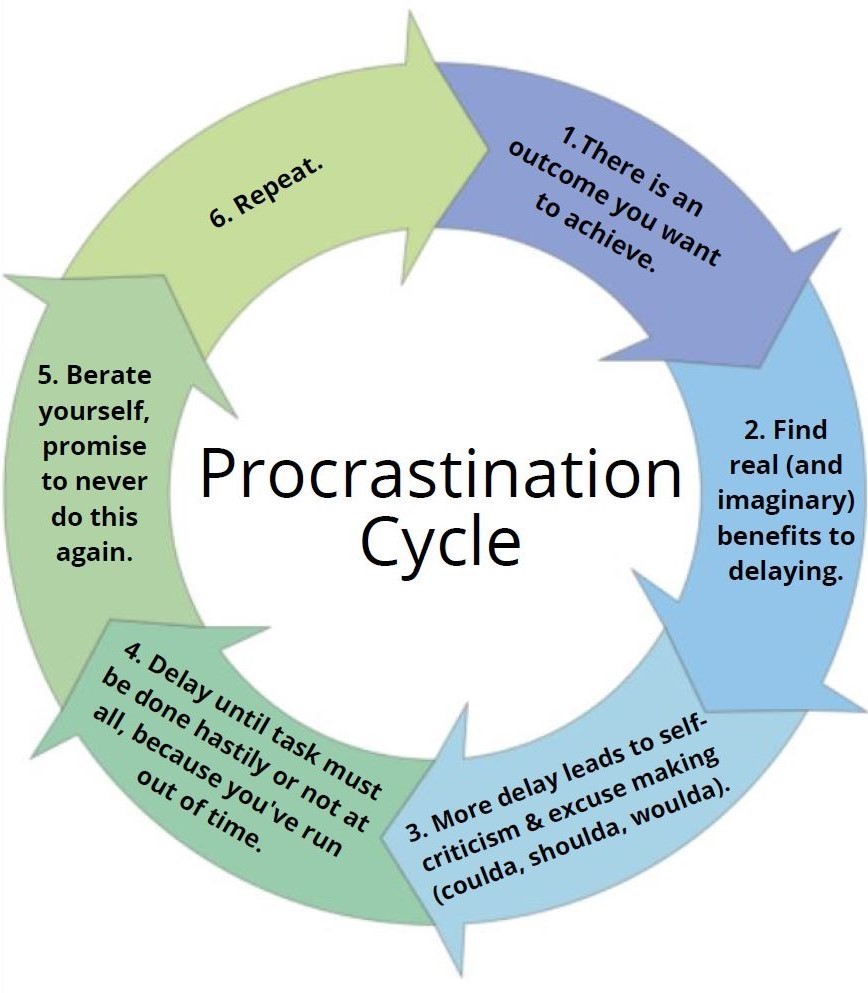
Cornell’s Procrastination Cycle 3
The book Learning How to learn discusses procrastination, which proves to be a common issue among all teens, becoming a cycle. To break this cycle it is helpful to use the Pomodoro technique, where a timer is set for 20-25 minutes, and all distractions are moved. Move your phone out of the space you are working in and make sure you are in a quiet space. Then work until the timer runs out and take a break. Repeat! 10
Seeking Help
If you are looking for even more improvement in school, there are resources you can utilize to further your strengths.
- A helpful resource to use may be the guide for teens Learning How to Learn. It includes a lot of the information above as well as more information about doing your best in school…. Buy Here
- If you feel like you are behind or lost in school, it may be helpful to meet with a teacher or counselor for specific resources to help.
 Support for Teens